
Bonita Springs Address History Sources
Bonita Springs previous residents do not appear in one complete roll. The Lee County Property Appraiser supplies the present STRAP parcel number, site address, owner, sales, permits, and the first year a building appeared on the tax roll. Lee County deeds provide the ownership chain. Regional directories, census schedules, and newspapers can then test whether an owner or another household occupied the site. Keep the record date beside every name because title, exemptions, addresses, and household members change.
| Record source | Local time span | Access point | Best evidence |
|---|---|---|---|
| Lee deed books/index | 1887 forward; full web start unstated | Lee Clerk web and Historical Library | Owners, parties, land, transfer date |
| Property roll | Current and historical fields | Lee Property Appraiser | Owner, situs, mailing, buildings, sales |
| Regional directories | Intermittent leads, 1915 to 1960 | State and Lee libraries | Occupants, spouse, work, address |
| News-Press | From 1884 in library inventory | Fort Myers Regional Library | Transfers, obituaries, local news |
| Federal census | Public through 1950 | NARA and library databases | Household and occupancy |
Begin with deeds for title and with a directory or census for occupancy. A deed proves ownership, not residence. A directory can place a person at an address, not prove ownership. Agreement between them is far stronger.
Start Bonita Springs Records Today
Open the Lee Property Data Search and choose Site Info for the street address. Record the STRAP, Folio ID, legal description, current owner, site address, and sales entries. STRAP is Lee County's stable parcel key. The owner mailing address is where appraisal mail goes, while the situs address is the physical place. A mismatch may show remote ownership, not an error.
The parcel page can show the first year the structure appeared on the roll, permits, historic designation, flood and storm facts, and map links. Those facts create a chronology around past residents without proving who slept there. Homestead status can support owner occupancy, but it may lag a move and is not conclusive.
The captured sample Lee parcel record shows how these fields sit together.
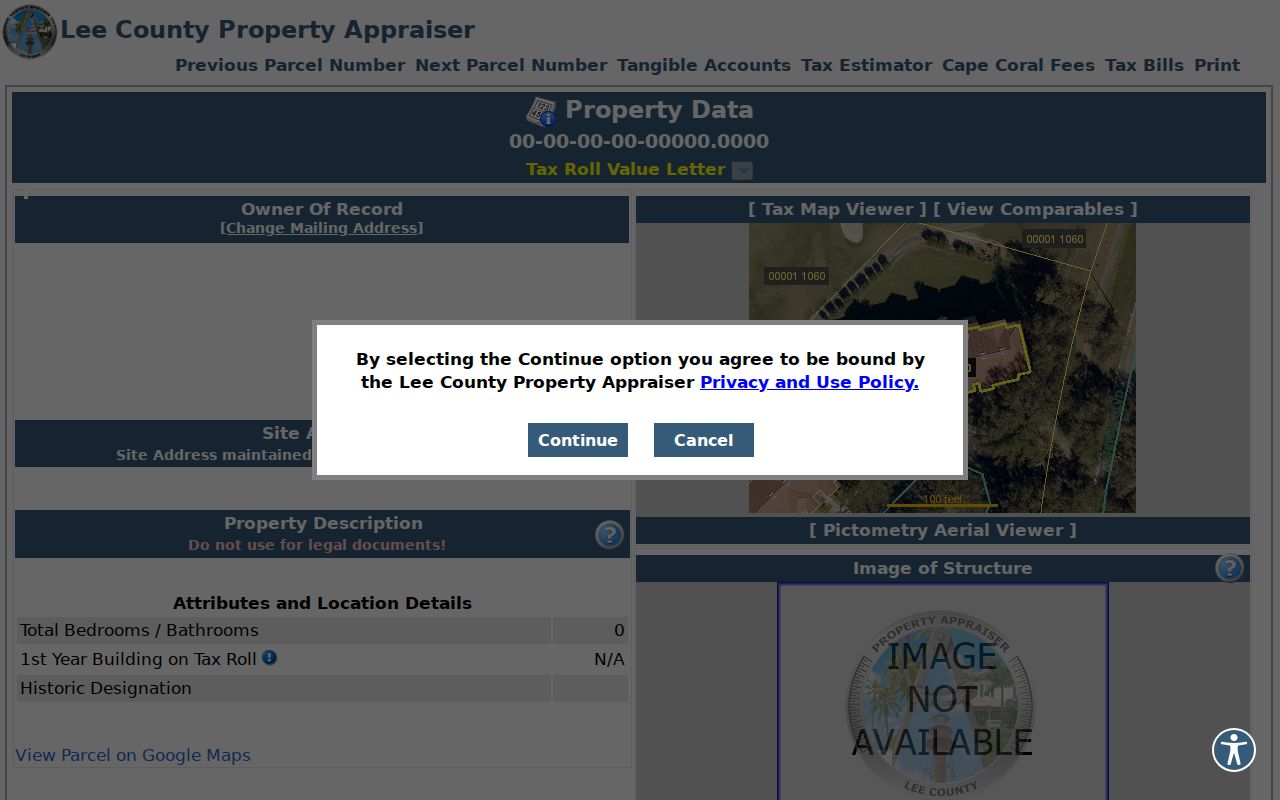
Carry the parcel identifier from this kind of record when names or street labels change.
Walk Back Bonita Springs Deeds
The latest qualified sale points to the first conveyance. Search Lee Clerk Official Records for the present owner as grantee, the party receiving property, and confirm the parcel or legal description on the deed image. The grantor transfers it. Names alone are weak because two people may share one.
- Copy the current STRAP, legal description, owner, and latest sale.
- Find the purchase deed by name, instrument number, or book and page.
- Confirm the land, then treat the grantor as the prior owner.
- Search that person as an earlier grantee and repeat.
- Carry book and page into the historical volumes when needed.
- Grantor and grantee
- The grantor transfers an interest; the grantee receives it.
- Chain of title
- The linked sequence of conveyances for the same land.
- Legal description
- The formal land identity that survives a street-address change.
- STRAP
- Lee County's parcel key across appraisal, deed, tax, and map records.
Mortgages and releases help separate names, but do not transfer title. A deed image may add mailing addresses, consideration, witnesses, a notary, and return data. Treat those as dated leads, not proof of residence.
Bonita Springs Trails Before Web Search
The Clerk search opens with a date range beginning in 2010, but that is a default. Change it for older instruments. The exact earliest complete online index year is not stated. The Historical Document Library preserves more than 150 original books, including general indexes from Lee County's creation in 1887.
Researchers may inspect and photograph or hand-scan old volumes, though fragile books cannot be copied. The holdings include tax-deed and redemption books, Bride and Groom indexes, County Commission minutes, and a Marks and Brands volume from 1899. Before 1887, a land trail may lead to Monroe County because Lee County was formed from it. That shift is a filing break, not proof the title chain ended.
Match Bonita Springs Past Households
Once the owner sequence is sound, search for previous residents in regional Fort Myers and Lee County directories. Bonita Springs has no verified standalone annual run in the official catalogs reviewed. Intermittent directory leads exist from 1915 through 1960, but each volume must be checked for Bonita coverage. Reverse, or criss-cross, pages sort by street and house number. The collections are treated on the Bonita Springs city directory page.
- Select a directory year near a known deed or census date.
- Check the street section and copy each name at the house number.
- Compare a year before and after the nearest public census.
- Record spelling, spouse, work, and address as printed.
- Bridge gaps with deeds, newspapers, probate, and obituaries.
A missing line does not prove a move. Seasonal absence, missed canvassing, a rural route, or limited coverage can erase one household from one issue. The 1950 census is the newest public decennial schedule under the 72-year rule.
Bonita Springs Library Research Paths
The Fort Myers Regional Library Genealogy Room is the main research center. It offers extended appointments, FamilySearch Affiliate computers, in-library Ancestry Library Edition, HeritageQuest, Fold3, News-Press microfilm, and a necrology card index. More than 300 genealogy study guides cover land, courthouse, maps, census, directory, and newspaper work. Combined, they support a house history even though no Bonita-specific house guide was found.
The Bonita Springs Library had a secondary collection and about 20 local vertical files in the older inventory. Confirm current holdings. Interlibrary Loan may take four to six weeks and may provide copies rather than lend a rare book.
Date a Bonita Springs House
Permits and appraisal fields date physical change. Bonita Springs Community Development keeps building, zoning, planning, inspection, applicant, and project records. Compare permit dates and the first tax-roll year with ownership changes to see whether construction or a sale falls within one owner's span.
An applicant may be a contractor or agent, so a permit is event evidence, not a resident roll. A code case may show notices, compliance, liens, or hearings while saying little about the household. When a file is not online, make a focused Florida Public Records Law request with the address, parcel, record type, and date range.
Close Bonita Springs Resident Gaps
Obituaries, probate, and church or cemetery records can explain where a trail ends. News-Press microfilm begins in 1884 in the library inventory, and the Genealogy Room's 2015 guide listed more than 8,000 necrology cards. An obituary may link spouses, children, and a date of death. A public probate file may identify an estate and heirs.
Do not make one shared surname into a family tie. Check the chronology against deeds, directories, and public court documents. Certified vital records have eligibility rules. Newspapers and cemetery records corroborate a trail but do not replace a certified record.
Use Previous Residents Records Lawfully
Bonita Springs previous residents research suits family history, estate work, preservation, and curiosity about a house. It is not a license to locate or pressure a living person. Protected addresses and confidential details may be withheld even when nearby records remain public.
Lawful use. Use a past-resident trail for house and family history. Never use it to watch, harass, intimidate, or harm a living person.
Keep an evidence log with source, date, parcel identity, and what each item proves. That prevents an owner, applicant, relative, and occupant from becoming one false profile.